1. Puh!
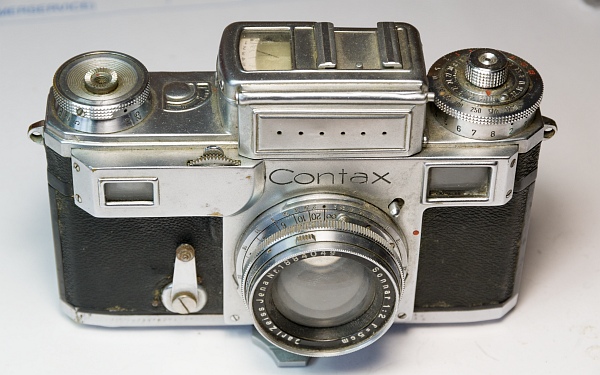
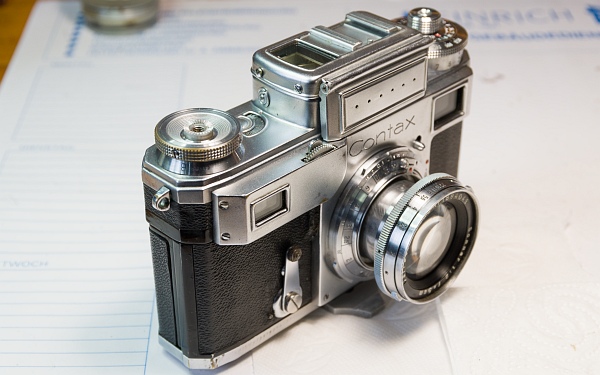
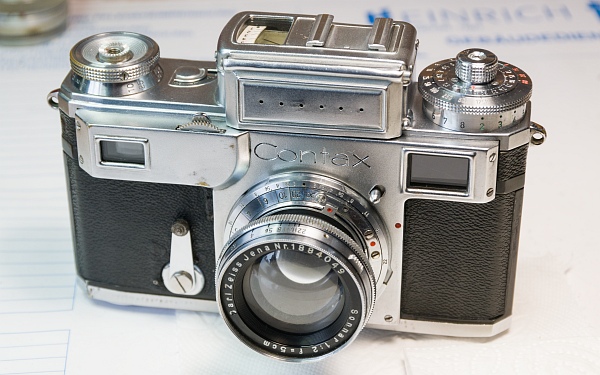
First impression: Looks OK. Second impression: It's covered in dirt, brownish tar and nicotine deposits, and a lot of dust.
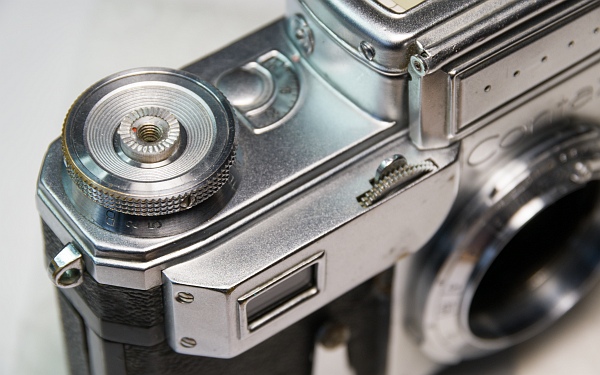
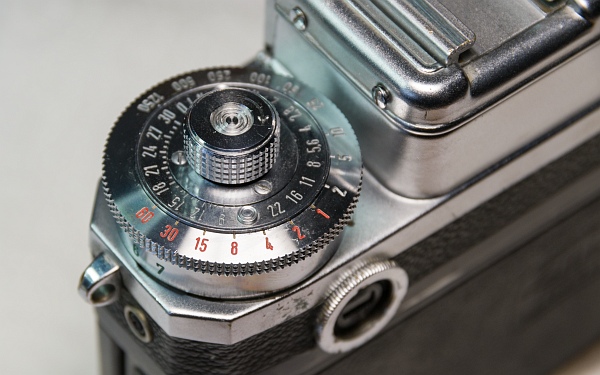
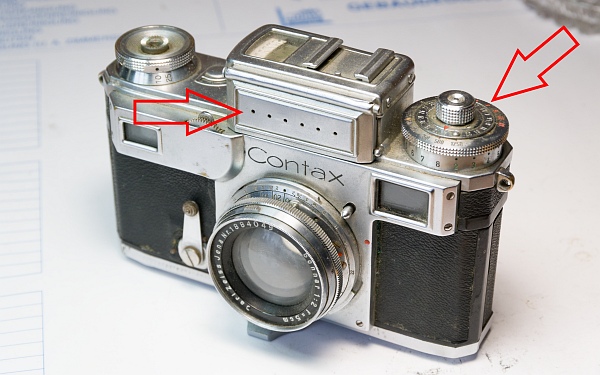
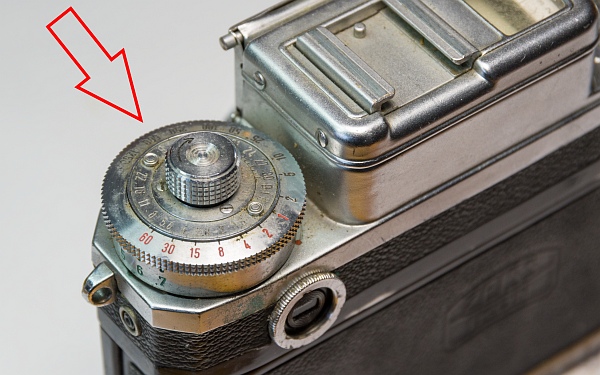
Special features include six holes in the exposure meter cover and a new exposure meter unit. The scale on the top has also been modified. In addition, a flash connector has been installed on the left side of the body.
As worn out as it looks, the shutter works very well at all speeds.
2. Remove winding knob
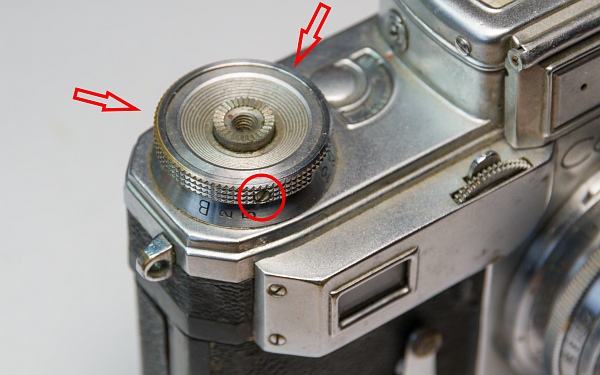
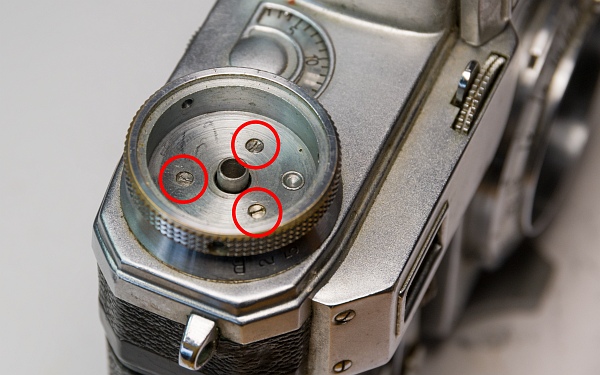
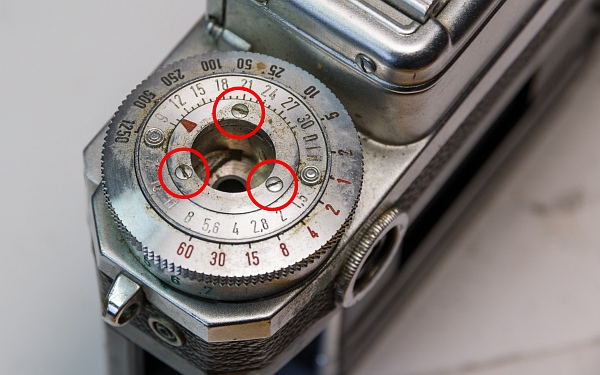
First, remove the winding knob. Remove the 3 marked screws (left).
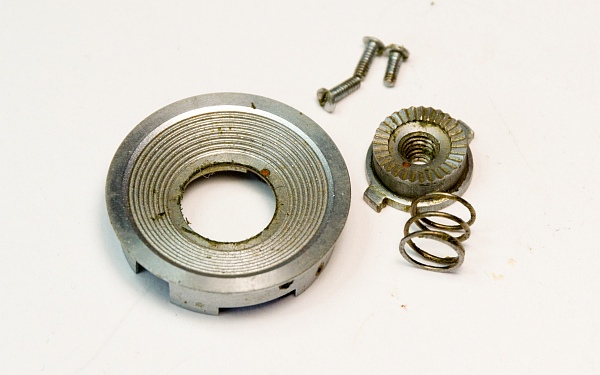
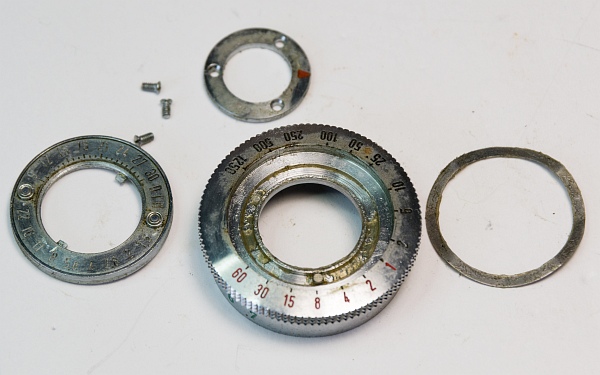
The parts that come out (bottom left).
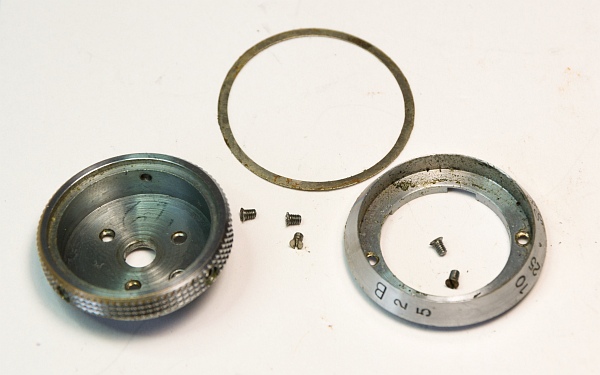
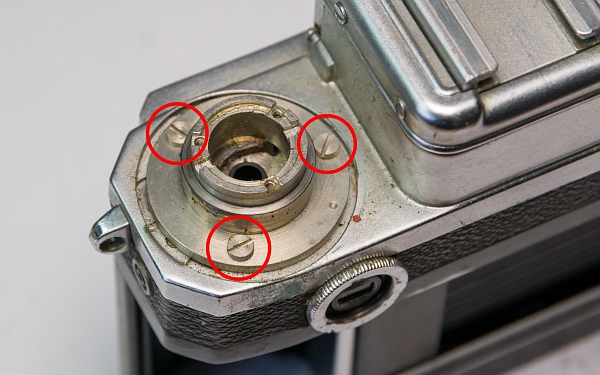
Then remove the 3 screws that hold the winding knob (bottom).
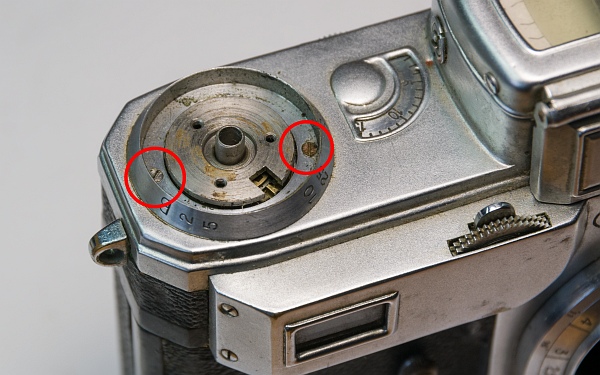
Now remove the two screws that hold the speeds scale (bottom left).
The heavily soiled parts. The washer may be missing or there may be up to 3 of them (bottom).
3. Rewind knob and light meter unit
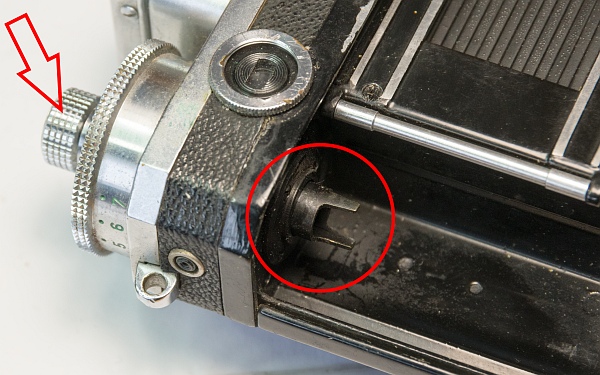
Hold the fork with pliers and turn the rewind crank counterclockwise (left).
Then remove the 3 screws. The exposure meter unit is almost identical to that of the Contax IIIa or the Super-Ikonta. However, the lower edge is not conical but straight (bottom left).
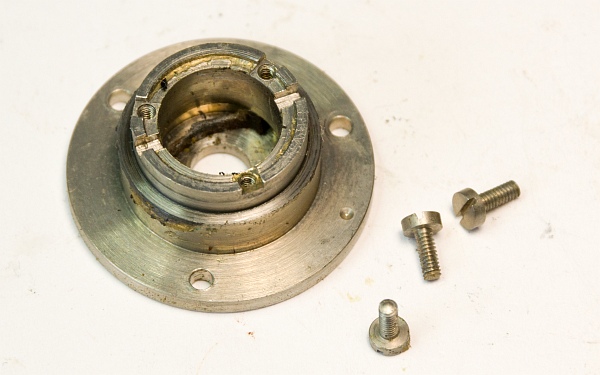
The rather dirty parts (bottom).
Unfamiliar components appear underneath. Remove the 3 screws and take off the part (bottom).
4. Disassemble exposure meter
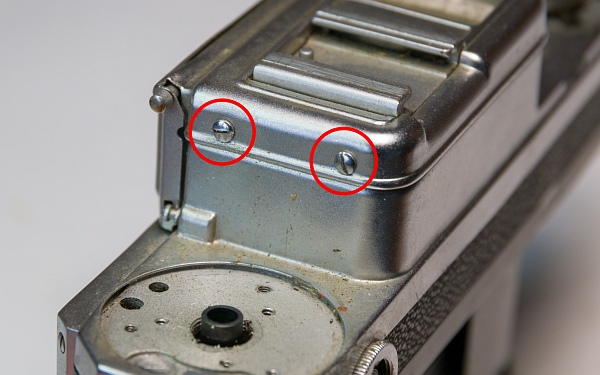
To access the inner workings of the light meter, the cover must be removed.
Remove the 4 chrome screws (one of which is missing here).
Then remove the two screws from the selenium cell holder. The diffusing lens in front of the light meter is in poor condition. Some ribs are missing and it is broken (below).
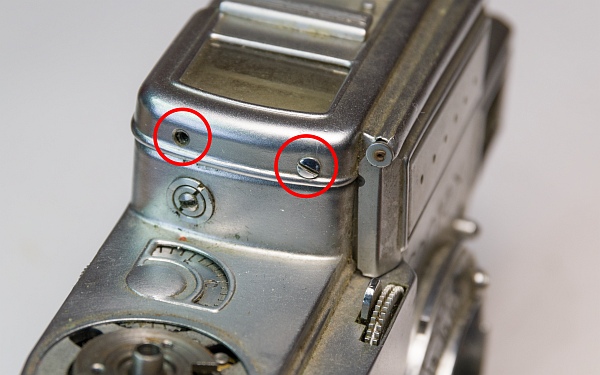
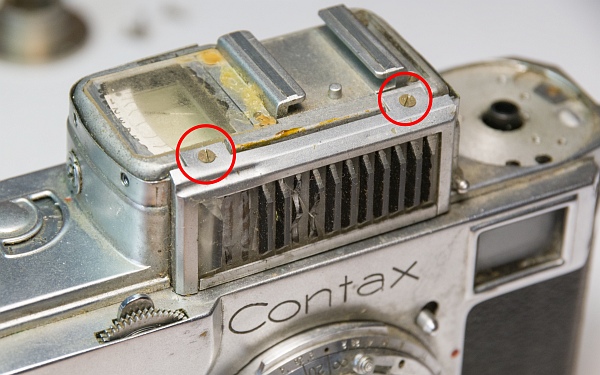
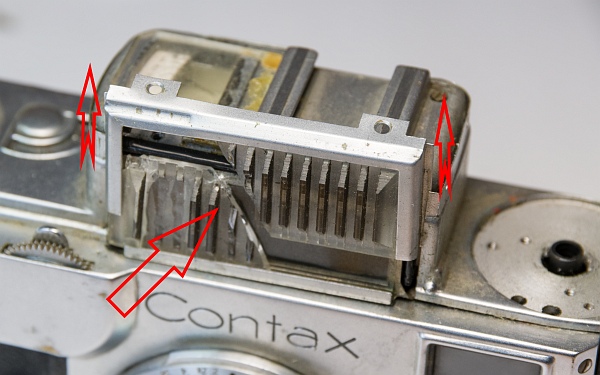
Then the frame can be slid out upwards. It holds the diffuser lens in place.
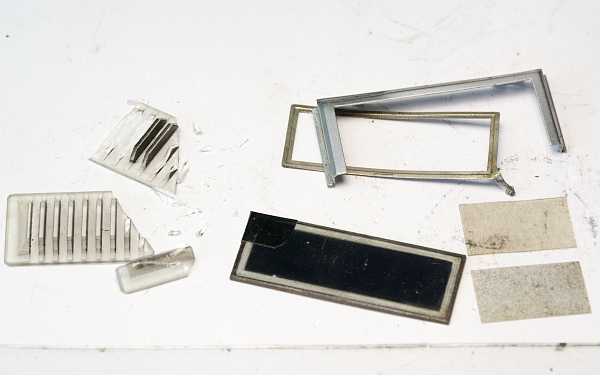
The parts that come out.
On the left is the broken diffusing lens. It is actually made of glass and not plastic. At the bottom is the selenium cell, at the top is the frame that holds everything together and one of the contacts (I still have to figure out where it needs to be soldered back on). On the right are two gray filters that were placed between the diffusing lens and the selenium cell. The new selenium cell (or is it something else?) appears to be significantly more light-sensitive. On another of these Contax III cameras, the rear 2/3 of the diffusing lens was blackened.
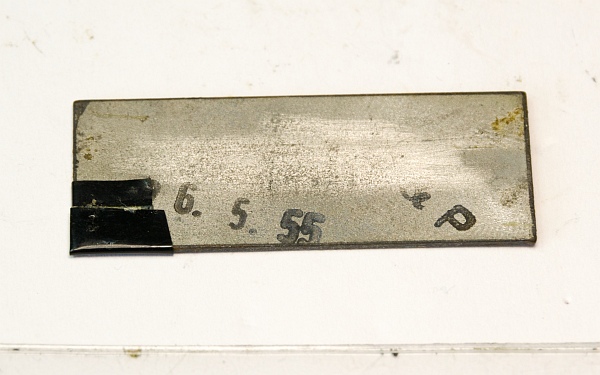
Below is the new light-sensitive cell from 1955.
I will replace the diffusing lens with one from an old Kiev III.
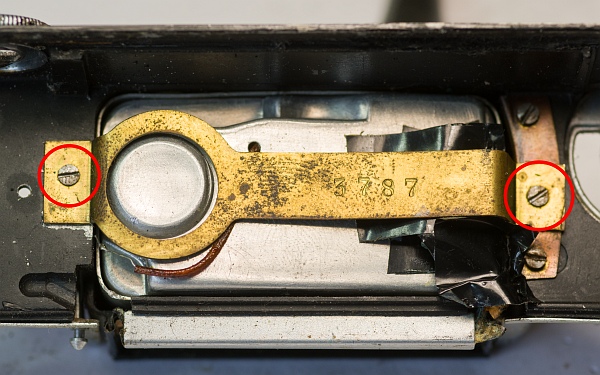
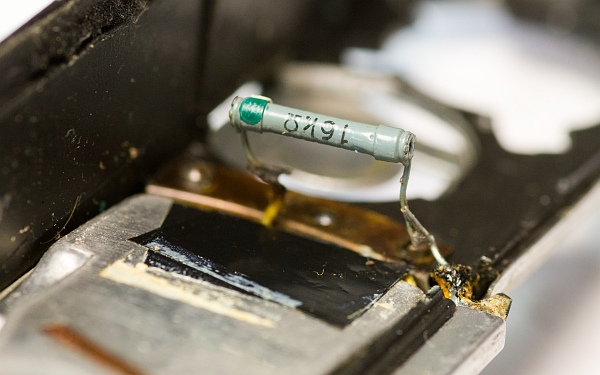
I have jumped ahead a little with the pictures at the very bottom, which can only be taken after removing the cover. If you remove the two marked screws that hold the exposure meter in place with a spring, a resistor appears under a piece of adhesive tape during this camera modification. As with the other modified Contax III, it has a value of 16kOhm.
5. Remove top cover
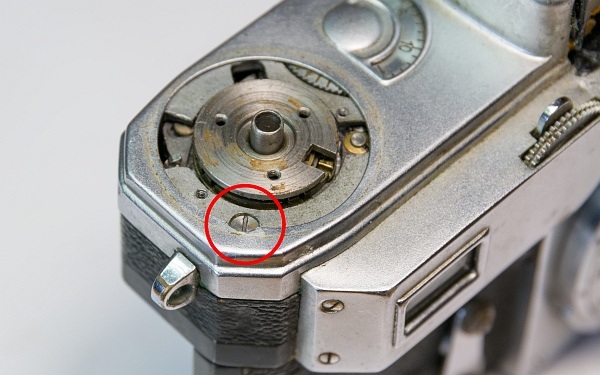
To remove the cover, 4 screws must be removed. First, remove the larger screw at the top (left). It tends to get stuck on the cover plate ...
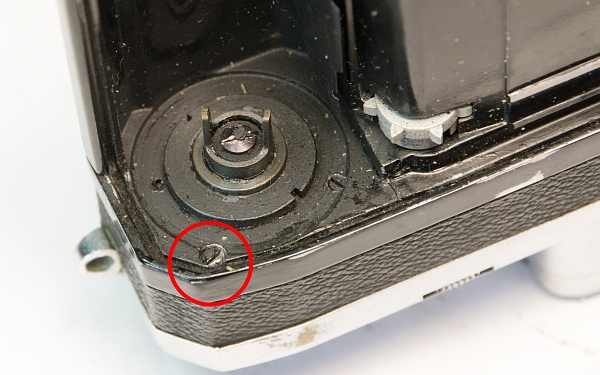
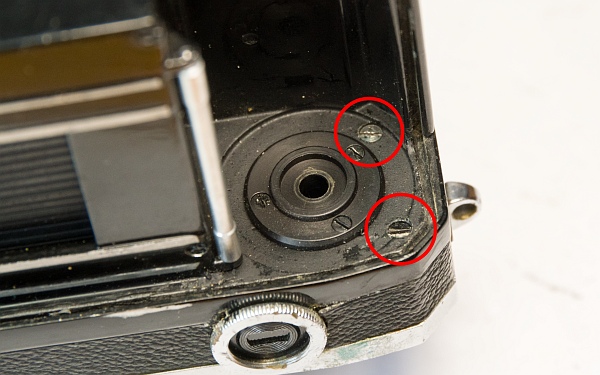
Then remove the 3 marked black screws (bottom). After that, you can pull the cover up with a little fiddling. The film counter disc may fall out.
6. Flash connector
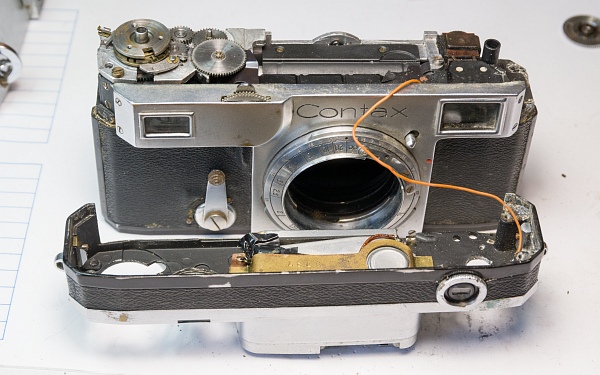
Another special feature of this modification is the retrofitted flash connection. It has two contacts, one at the top under the shutter release button and one at the bottom on the shutter. The purpose is as follows: When the shutter is released, the upper contact is closed, and as soon as the first curtain is down, the second contact is closed—the flash fires. When the shutter release button is released, the upper contact is opened again. This prevents an electronic flash from firing continuously until the shutter is cocked again.
The first contact is located below the cocking button (bottom left).
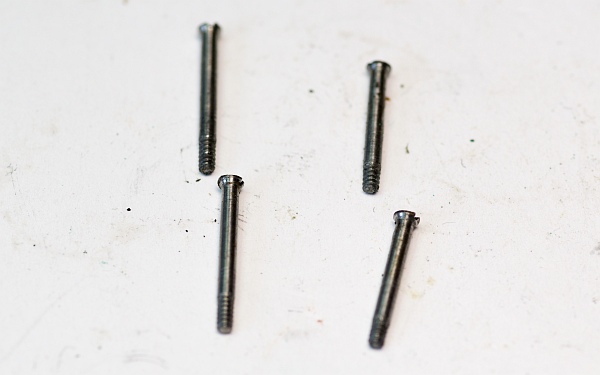
Remove the 4 screws that hold the shutter cover in place. Caution! They are of different lengths and only fit back in correctly (bottom).
Lift the shutter cover at the bottom left and then remove it sideways over the upper gear wheel of the spiked roller. This requires a little patience. Do not use force!
Look! The second contact at the bottom of the shutter is designed in exactly the same way as the other converted Contax III.
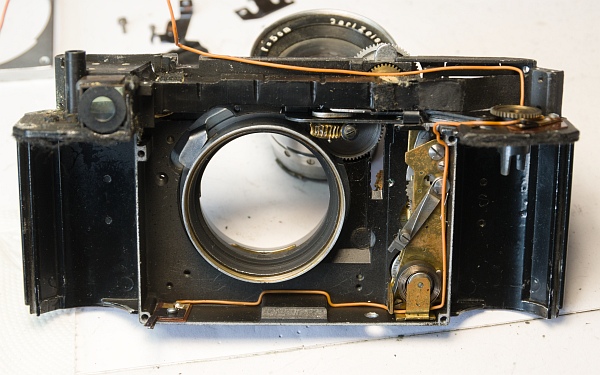
At the very bottom, you can see the complete wiring and the upper contact after removing the shutter.
7. Removing and installing the shutter
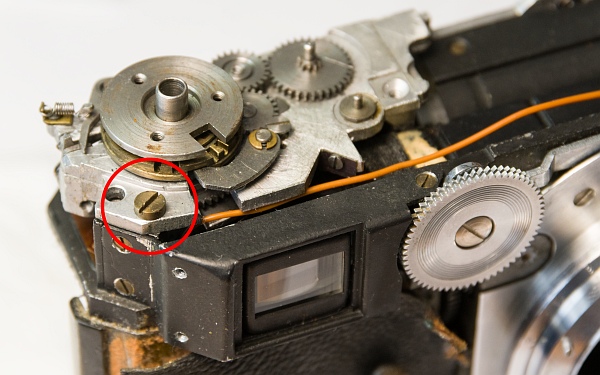
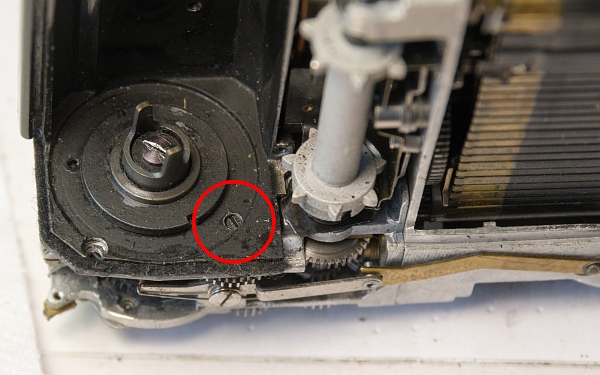
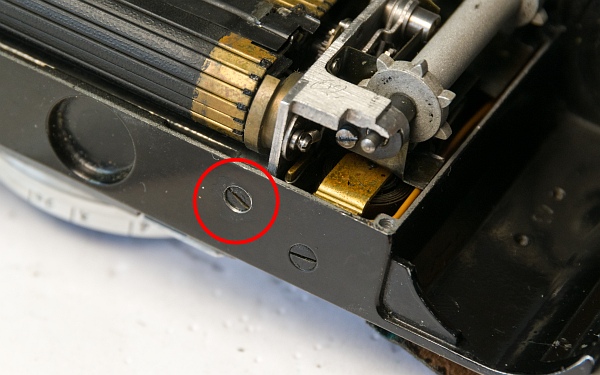
I wanted to remove the cover anyway in order to check the cable routing and remove the prism. First, we remove the large screw at the top (left).
Remove the marked screws (bottom left and bottom).
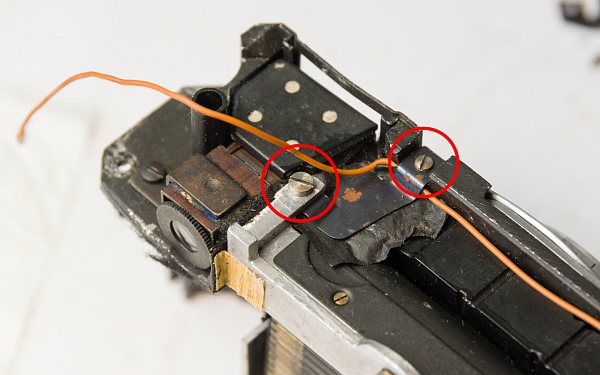
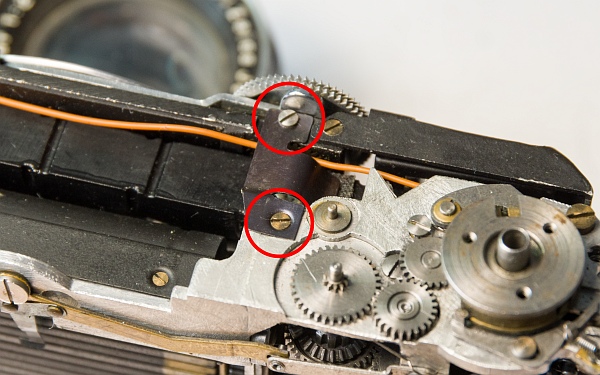
Then remove the two brackets that hold the cover and the prism in place. Both are held by two screws each. A piece of paper is always glued under the left one to shield the light (at the very bottom). To the right behind the prism is another piece of black paper to shield the light.
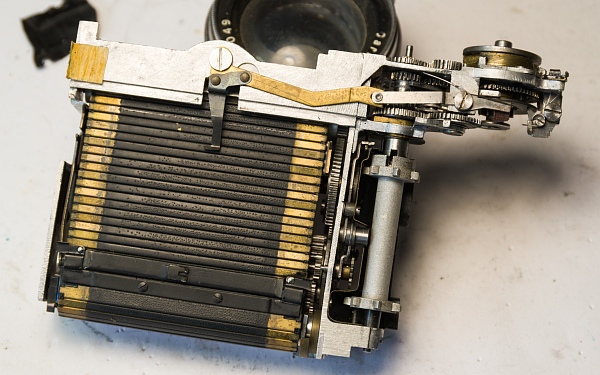
On the left is the removed shutter.
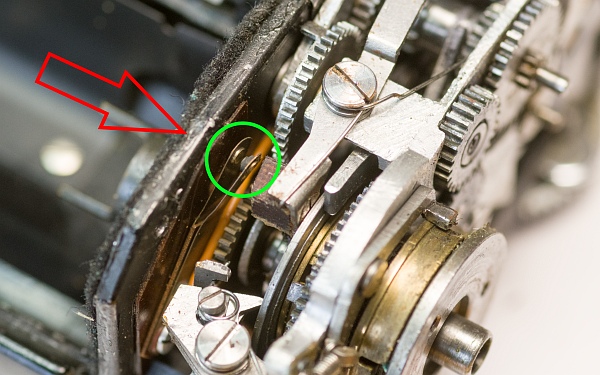
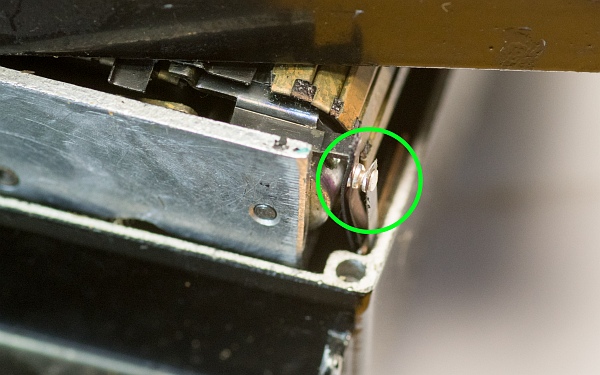
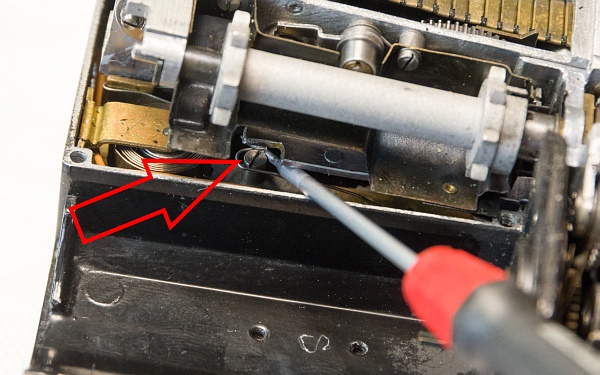
When installing it, make sure that the self-timer lever (the large screw – arrow!) is back in the correct position. It triggers the lever, which can be seen directly above the screw, which then releases the shutter during operation (bottom left). Pull it out with a small screwdriver and then insert the shutter completely.
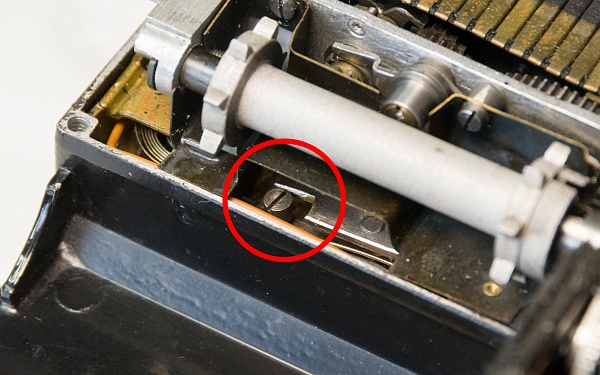
The correct position of the two parts can be seen below.
7a. The strange part
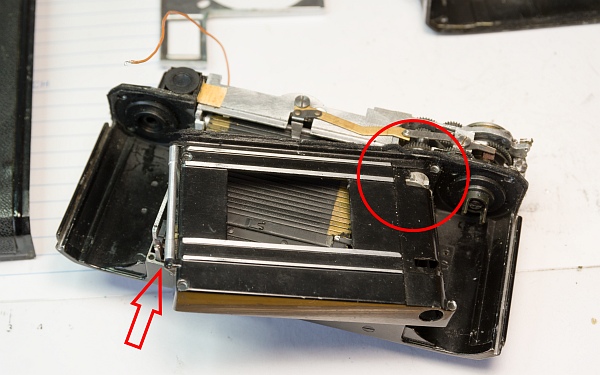
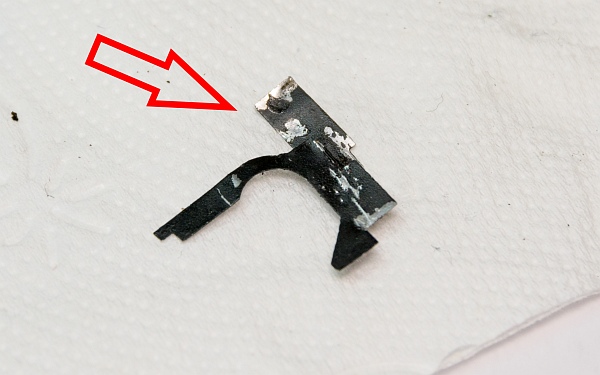
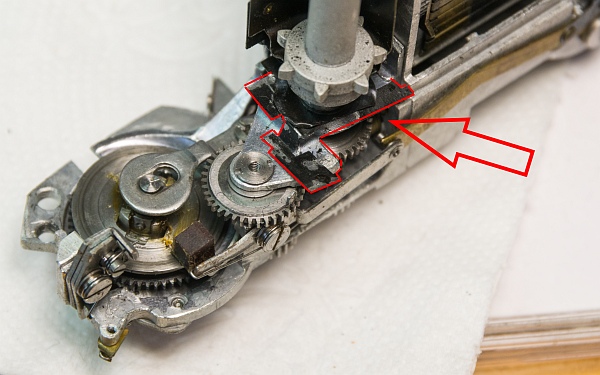
Stop! Anyone who has ever removed the shutter from a Contax or KIEV II or III will have noticed this strange part (below).
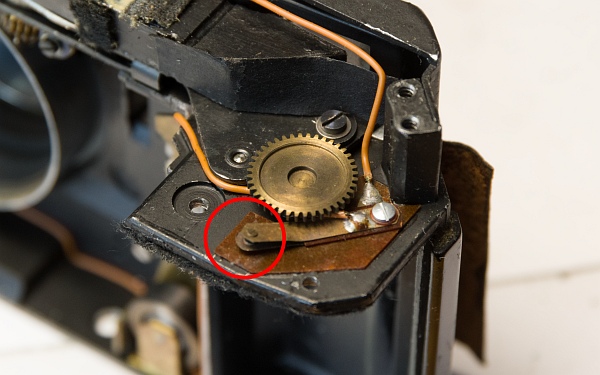
It is a small light shield made of sheet metal that prevents stray light from falling onto the film through a small gap.
Of course, I had forgotten, so I had to remove the cap again and reinstall it with the part. It is best to glue the part into the correct position with a glue stick or something similar before inserting the cap.
Below you can see the correct position of the part above the spiked roller (circled in red).
8. Glass cleaning
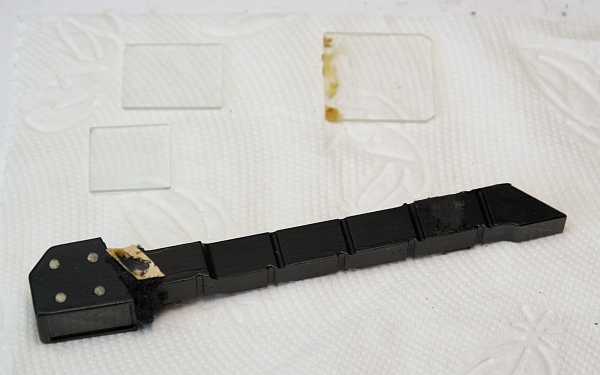
Now we clean all glass surfaces of the prism, the two windows, and the cover of the exposure meter.
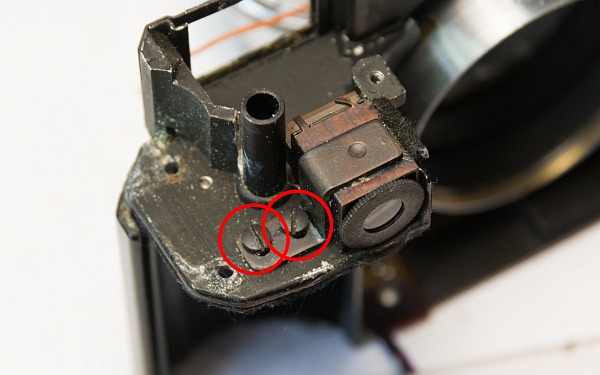
The rear eyepiece was also quite dirty. To clean it, the two screws must be removed (bottom left).
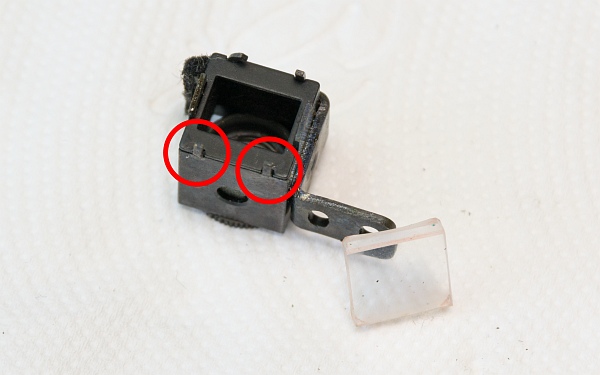
Bend 2 of the 4 clips open (you can do this with your fingernail), remove the glass, and clean it. Make sure it is positioned correctly when reinstalling it (bottom).
9. Assemble light meter
The light meter must be reassembled. First, we put the selenium cell back in, with the insulated corner as found (left).
The cable, which was probably torn off during removal, is soldered back to the frame and the frame is then placed on the selenium cell (right).
Now place the two gray-tinted films on the selenium cell (bottom left).
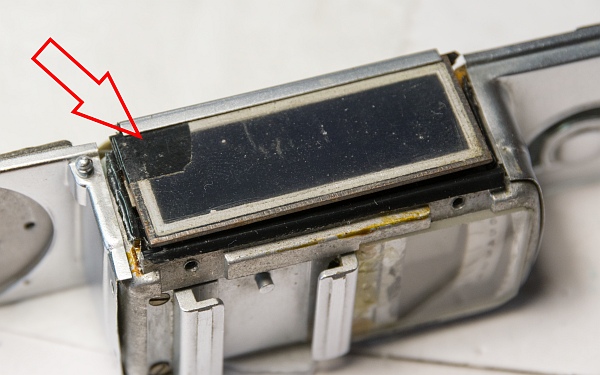
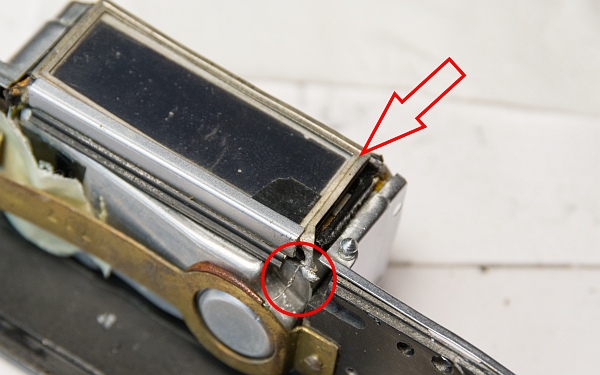
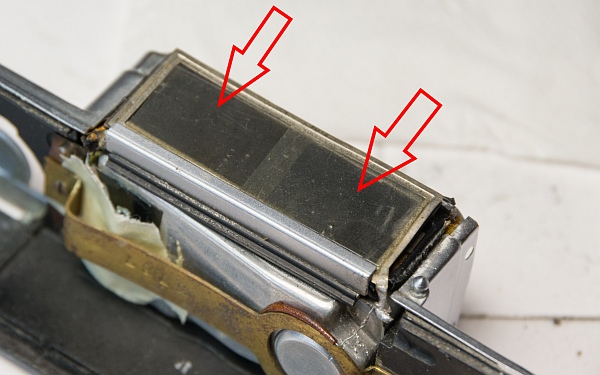
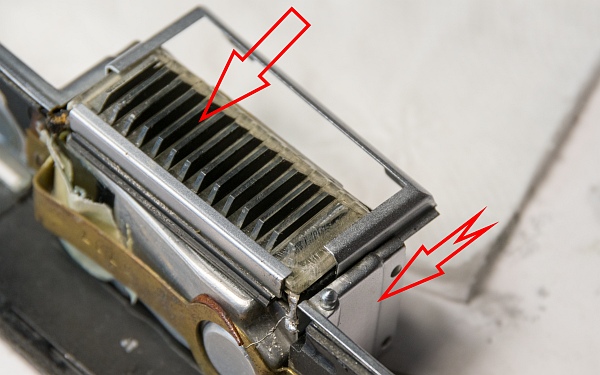
Then attach the new diffuser lens and slide in the outer frame from above. The whole thing should now hold together on its own (bottom right). Then insert the two screws at the top. Finally, replace the cover of the exposure meter.
10. Put on mask
Before the mask can be put on, we place the two front glasses back in front of the eyepieces (the large one is pushed into the frame, the smaller one is simply placed on top) and put the black frame back in front of the lens on the right.
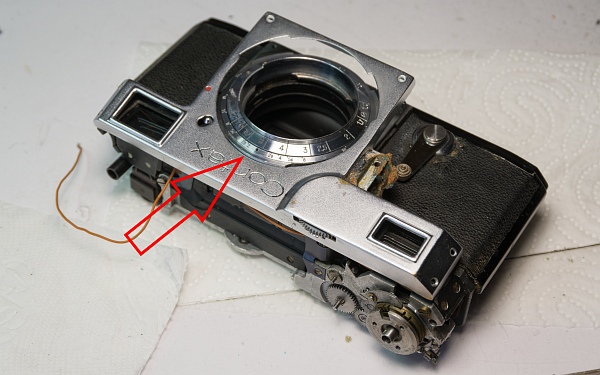
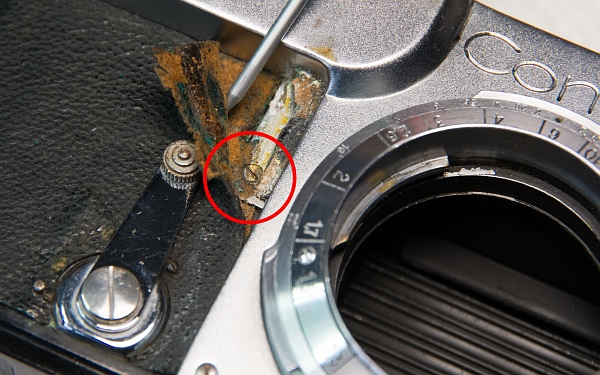
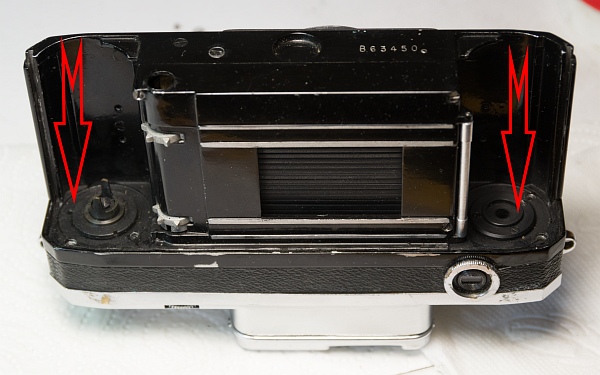
Then you can fold the mask down from above; it tends to get stuck at the point marked with the arrow (below), which is why more space was left there in later Kiev models.
Place the screws on the mask. One of the screws is hidden under the leather.
11. Cover on
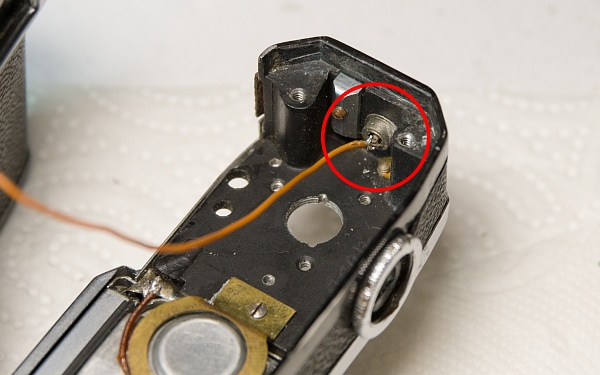
The covers must now be put back on. First, replace the shutter cover. Next, solder the cable of the flash connector back on (left).
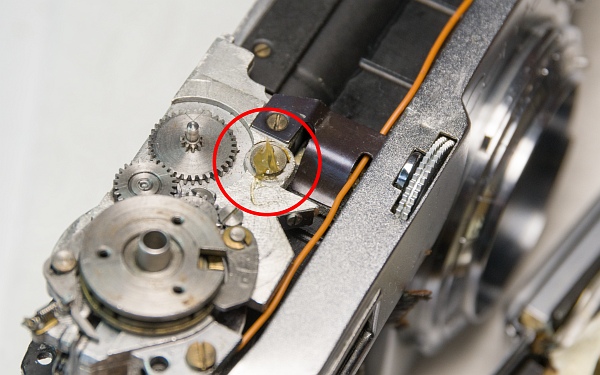
Apply some grease to the axle and replace the gear wheel (right).
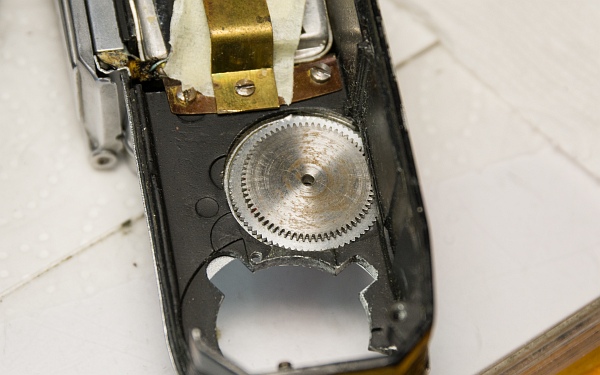
Place the film mark disc in its recess (bottom left). Then insert the shutter into the cover from above. This is easier than doing it the other way around, because otherwise the film mark disc always falls out.
Now reinsert the large upper screw and the 3 screws on the inside that hold the cover in place.
Then reassemble the winding knob and the exposure meter unit with the rewind crank.
12. Lens cleaning
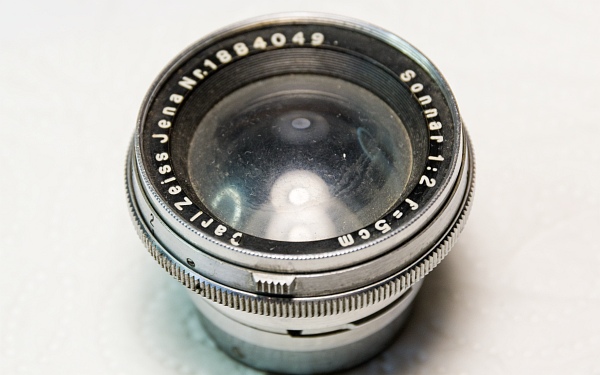
Service of the lens will be described here.
13. Reward for work
The result is impressive!
The light meter works again after the soldering work and is easier to use than the old version.
Everything is shining again, only the leather still looked quite worn. However, it could be restored with good black shoe polish.