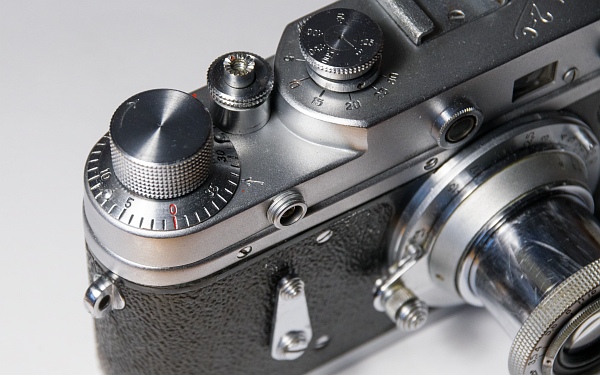
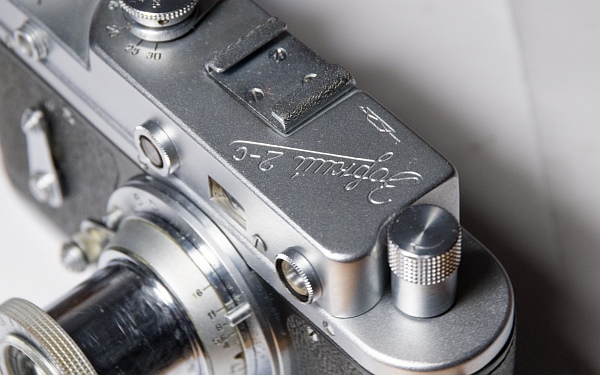
1. Introduction
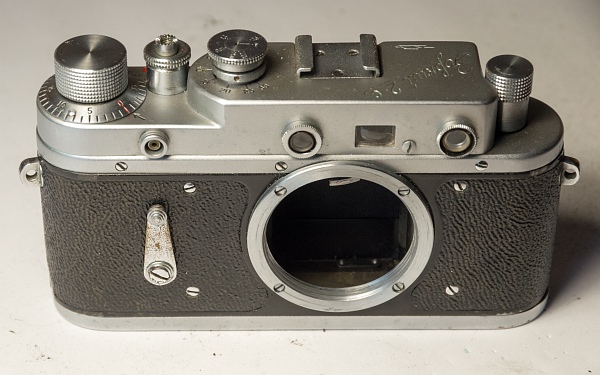
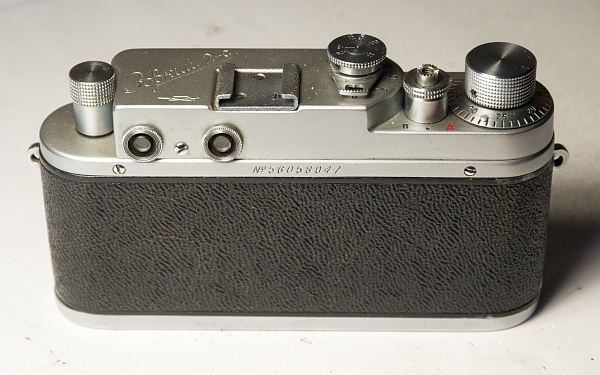
At first glance, it doesn't look too bad.
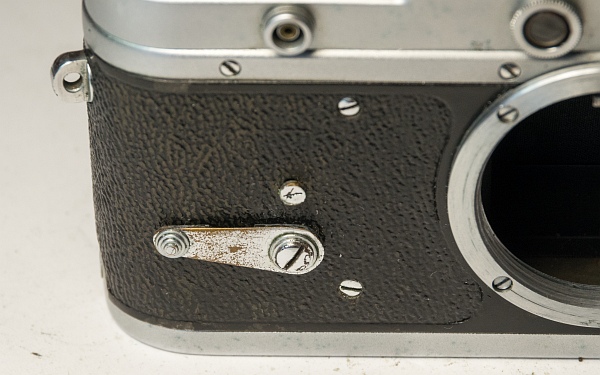
The self-timer lever is a bit worn, but I had a better-looking one left over from a defective Zorki 2. The self-timer on the Zorki 2 and the early Zorki 2C are identical.
2. Disassembly
2.1 Exterior
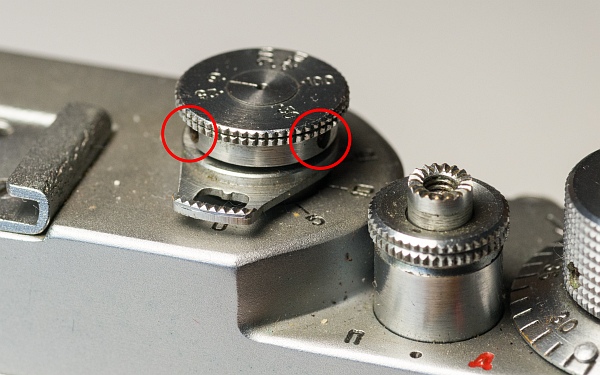
Let's start taking it apart.
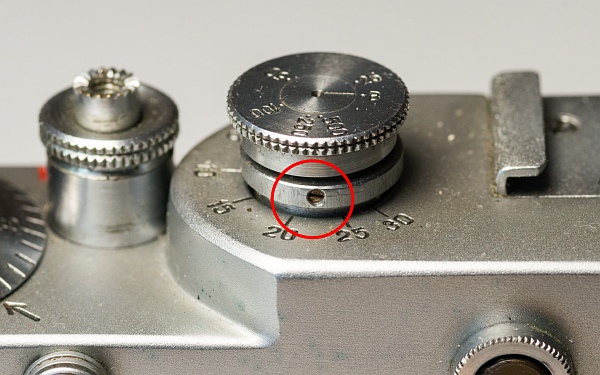
First, unscrew the speed knob. Remove both grub screws and pull upwards (left).
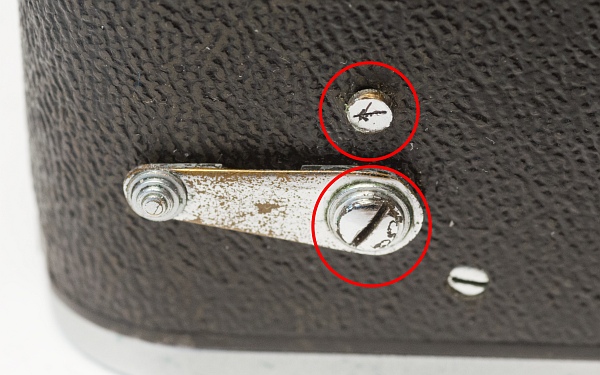
Then remove the small screw that holds the flash delay adjuster (bottom left).
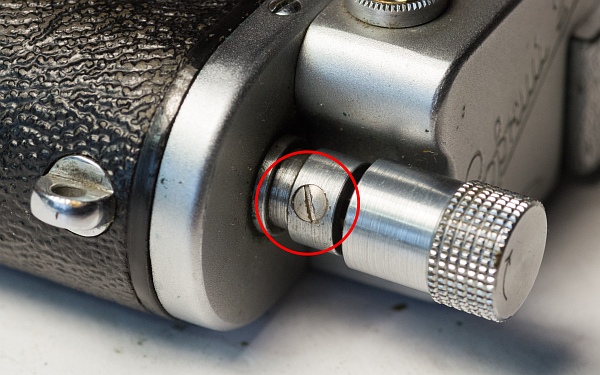
Remove the self-timer lever, which is held in place by the large screw. The release lever with the small arrow can be unscrewed counterclockwise; a rubber glove is helpful for this (bottom).
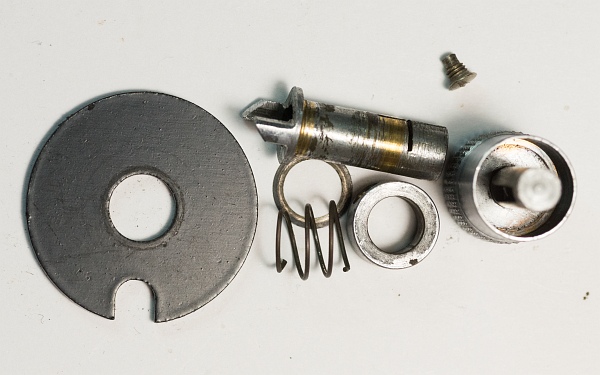
The parts of the self-timer (bottom).
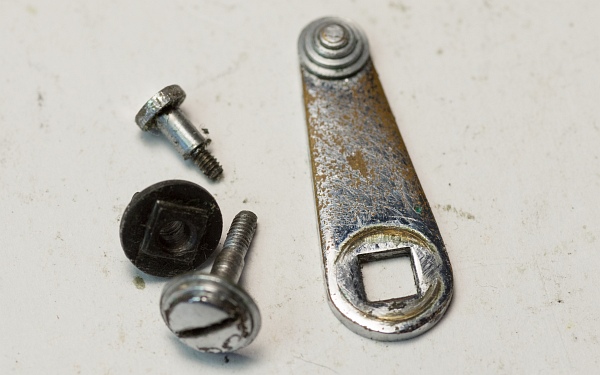
The black part on the left of the picture is the connector between the lever and the self-timer.
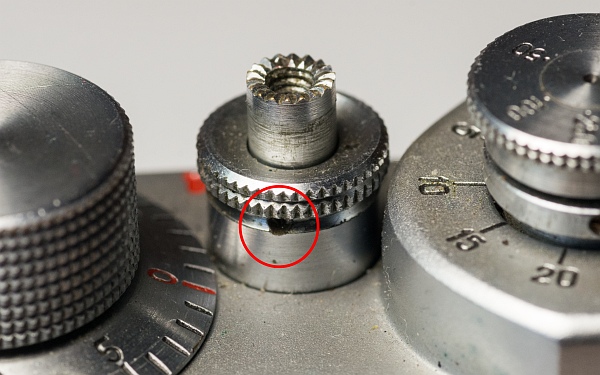
First, unscrew the grub screw on the rewind lock and unscrew the silver sleeve (left).
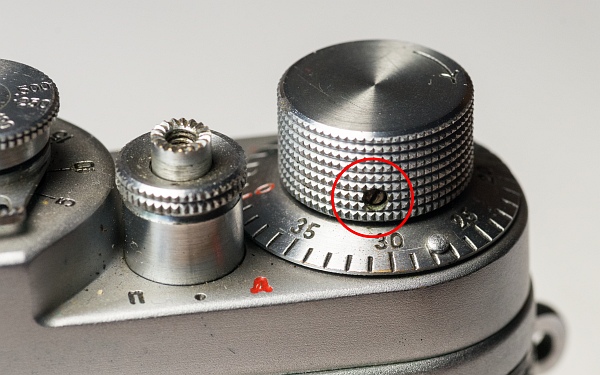
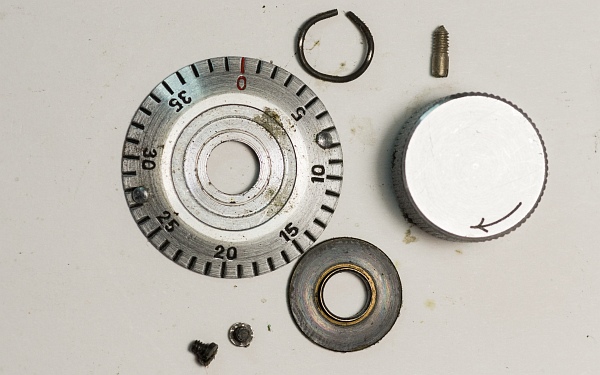
Then unscrew the grub screw on the winding head and turn the winding head counterclockwise. As always, hold the gear wheel inside to avoid overloading the spring inside (bottom left).
The parts of the winding knob in detail (below).
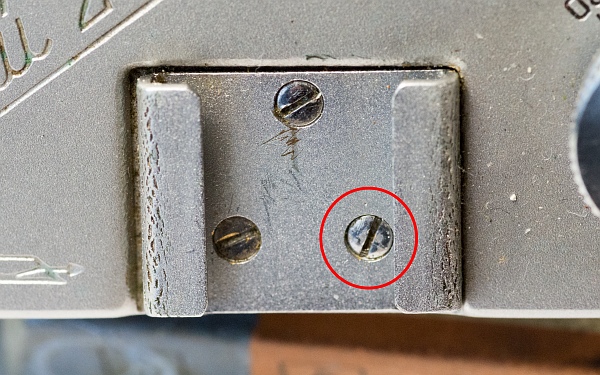
Simply remove the marked screw on the accessory shoe to remove the cover. The other two screws are fixed in a small retaining plate under the cover.
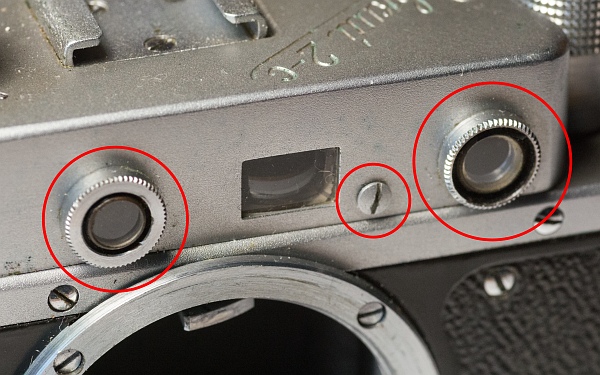
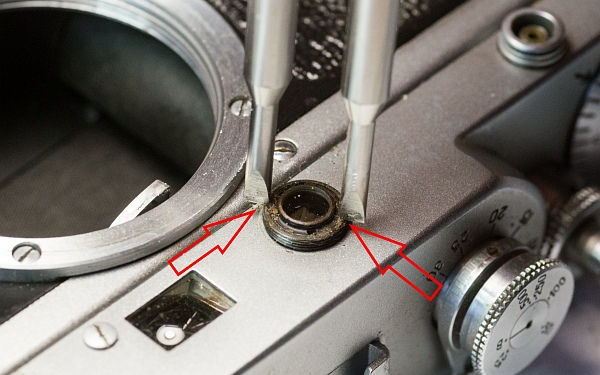
Now we need to remove the eyepieces. The ring above the left rangefinder eyepiece is usually easy to remove, but the right one can be a little tighter.
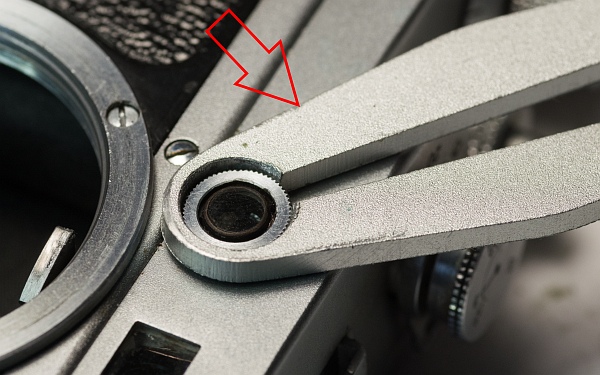
You can find handy little eyepiece pliers in various sizes on eBay or elsewhere, which make the job much easier (see below).
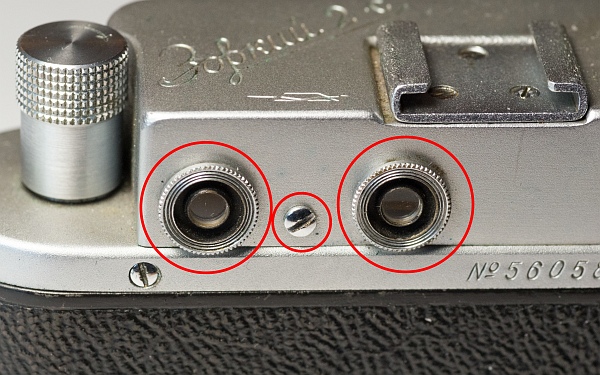
Remove the two marked screws at the same time.
Unfortunately, the two rear eyepieces are often very tight. Eyepiece pliers may also fail to work here (they are quite soft). Applying some Ballistol overnight usually helps. However, I have also had to resort to more drastic measures to remove them.
The eyepiece for adjusting the vertical image offset is also often quite stuck. A spanner works well here. There are two outer slots for removing the eyepiece and two inner slots for adjusting the vertical offset (below).
After removing the case screws and taking off the case, we can now remove the rewind crank.
The order in some of the photos is incorrect ;-) Before removing the rewind crank and the tension knob, you should remove the body.
I have always been impressed by the black disc, which varies depending on the model. Sometimes it is thick and cast, sometimes it consists of several individual sheets. All other parts have remained the same over the years.
The parts in detail.
2.2 Interior
The cover and housing have been removed, so now we can move on to the inner workings.
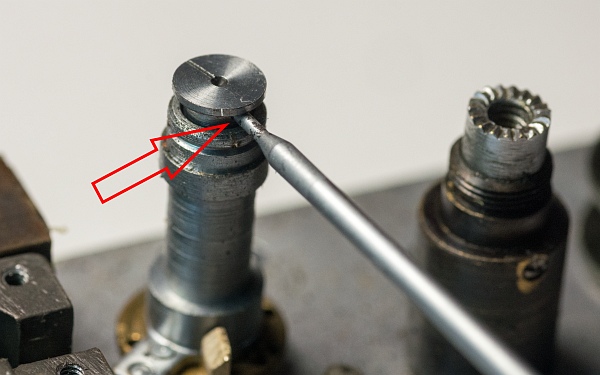
Let's start by dismantling the speed control. The middle part of the timer knob can be easily unscrewed using a small screwdriver inserted through the hole.
Then you can remove the knob (caution: spring!) and loosen the speed disc using the grub screw.
Pull out the long lever and remove the elongated spring. All parts are listed in detail below.
To unscrew the shutter, the rangefinder must first be removed on the Zorki C and 2C, as the shutter is screwed on from above.
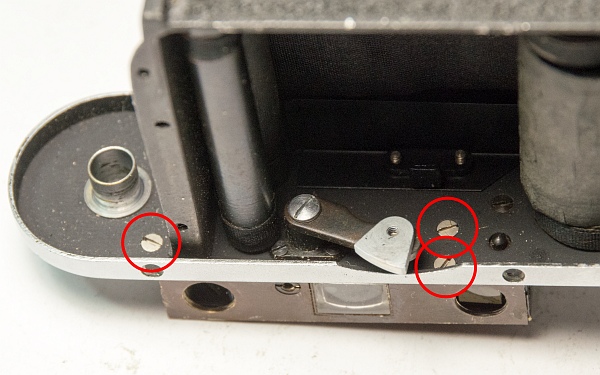
Remove the 3 marked screws. Then the rangefinder can be removed with a little fiddling (left).
The 3 marked screws hold the shutter (bottom left).
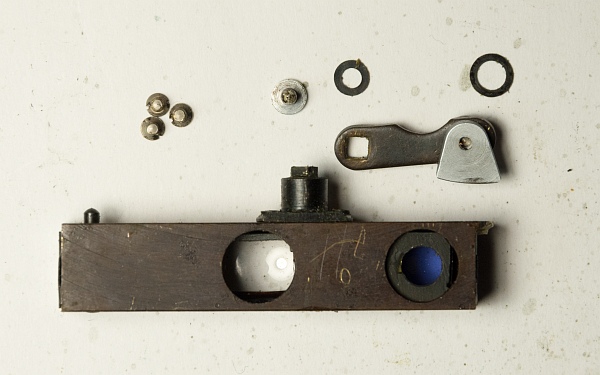
The parts of the removed and further disassembled rangefinder (bottom).
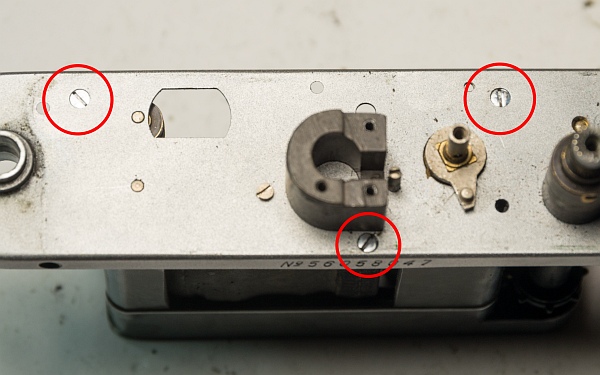
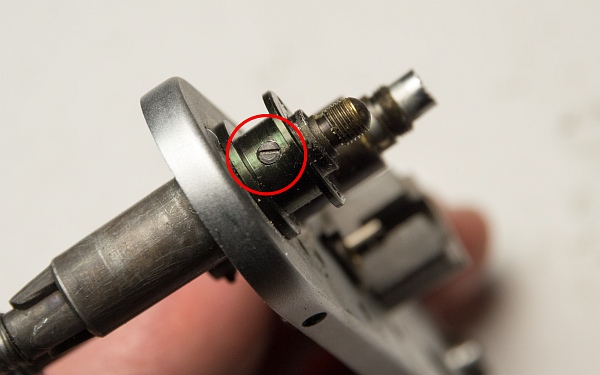
The winding mechanism must be dismantled. Remove the marked screw that secures the lower part of the winding mechanism (left).
Then remove the two screws (bottom left). The winding knob will then fall out (bottom left).
All parts in detail (below).
Remove the two small gears inside. How beautifully dirty everything is after decades... One of the gears has a left-hand thread and one has a right-hand thread (bottom left)!
Then loosen the screw on the spiked roller and remove it (bottom).
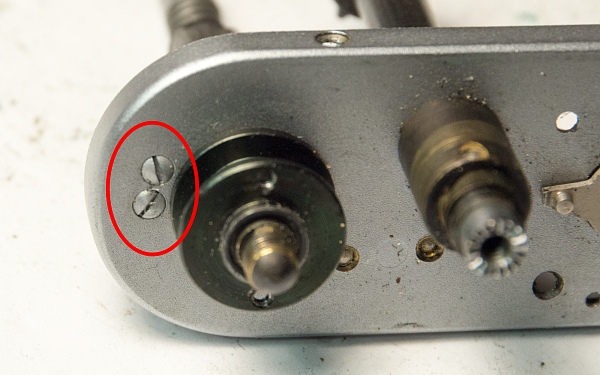
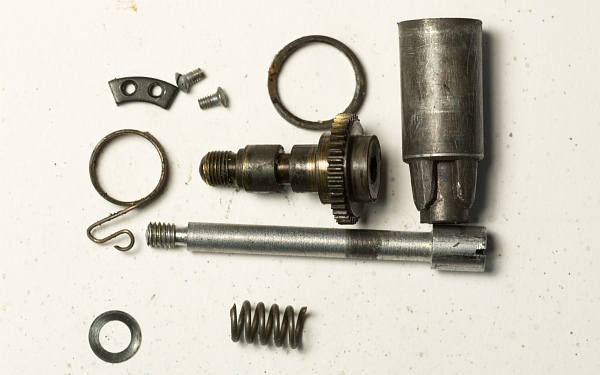
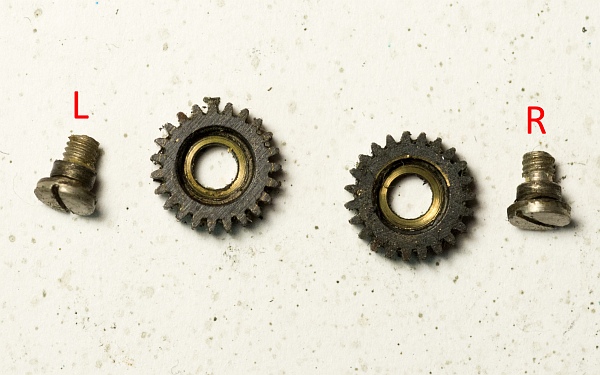
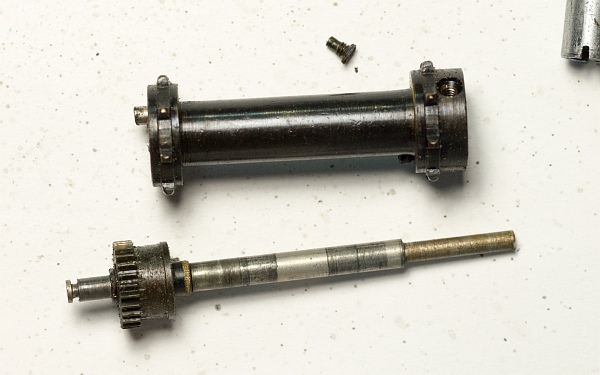
Now we remove the flash delay and the self-timer.
When handling the self-timer, you will eventually notice a short rod. Don't worry! It triggers the release spring when the self-timer expires. It is best to put it back in before installing the self-timer.
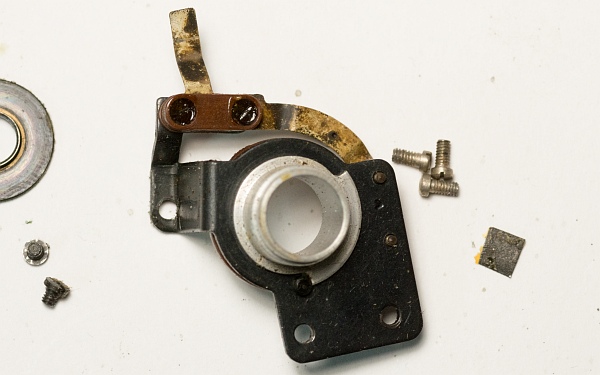
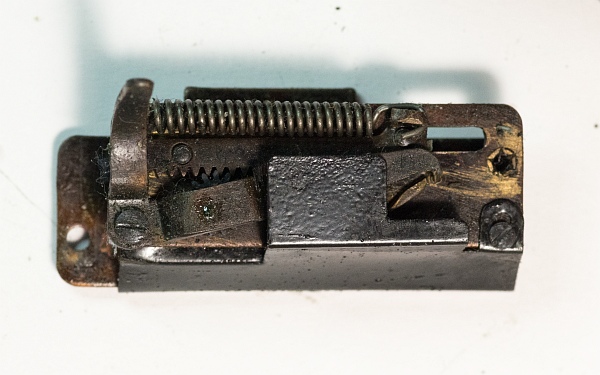
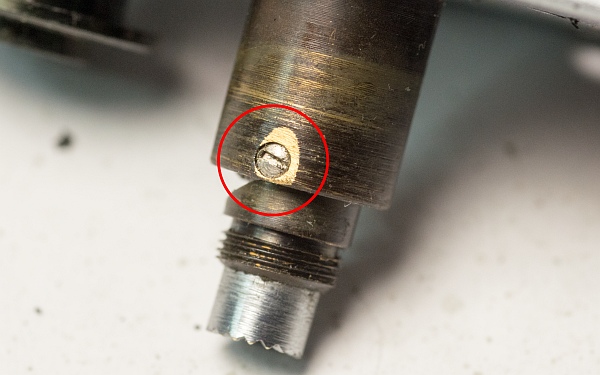
Now we come to one of the most complicated parts, the combined trigger and rewind release mechanism. It's quite easy to take apart. Remove the marked screw.
You'll find quite a few parts that don't seem to fit together. But it's actually quite simple...
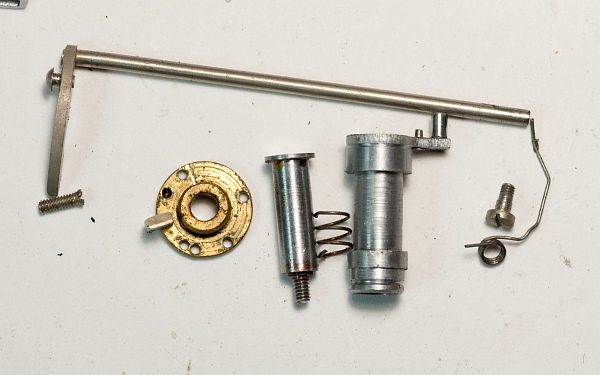
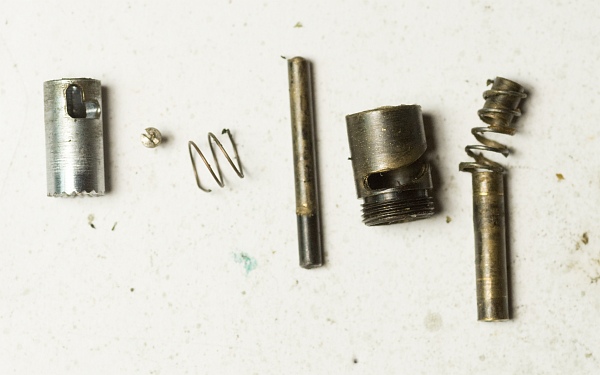
On the left is the shutter release, next to it is the small screw that has just been removed. The weak spring is for locking at ‘B’, the long rod releases the shutter, the thick sleeve with the thread is for the rewind lock, as is the two-part thinner sleeve with the spring.
In addition, the whole assembly decouples the trigger so that it no longer turns when cocking.
3. Assembly
For instructions on assembling the shutter and cutting the cloths to size, please refer to here. The process is identical and does not need to be repeated here.
However, I would like to explain how to assemble the trigger, as it caused me some headaches.
First, screw the spiked roller back on and reinsert the lower gear wheel with the rod.
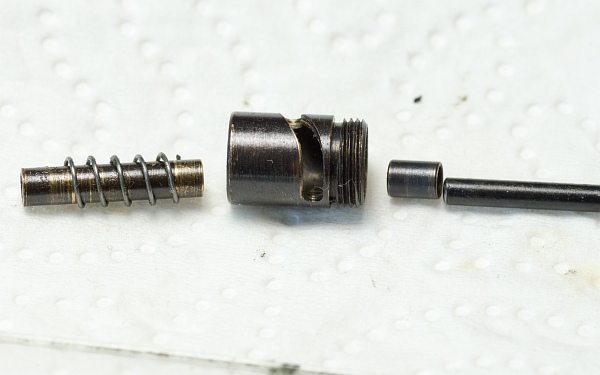
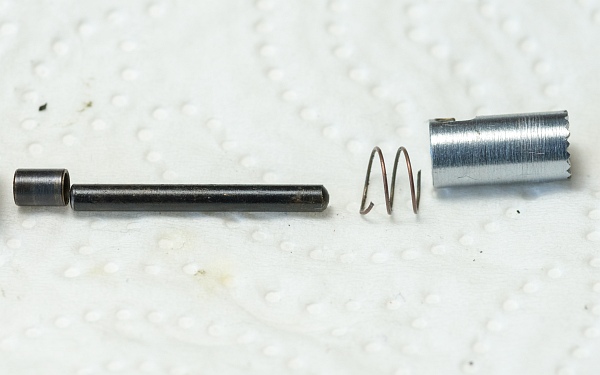
Then the longer sleeve can be inserted again, together with the long rod and the spring. Next, reinsert the rewind lock part. The short sleeve is inside the rewind lock part, together with the small spring.
Then reinsert the trigger, turn the whole thing so that you can reinsert the small screw, and with a bit of luck it will work the first time.
4. The result
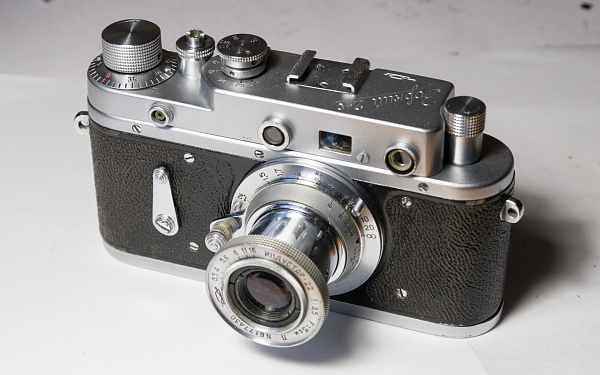
The result is quite impressive!
With the new self-timer lever and a matching Industar 22 from 1956 (like the camera) from my collection, it cuts a fine figure.